

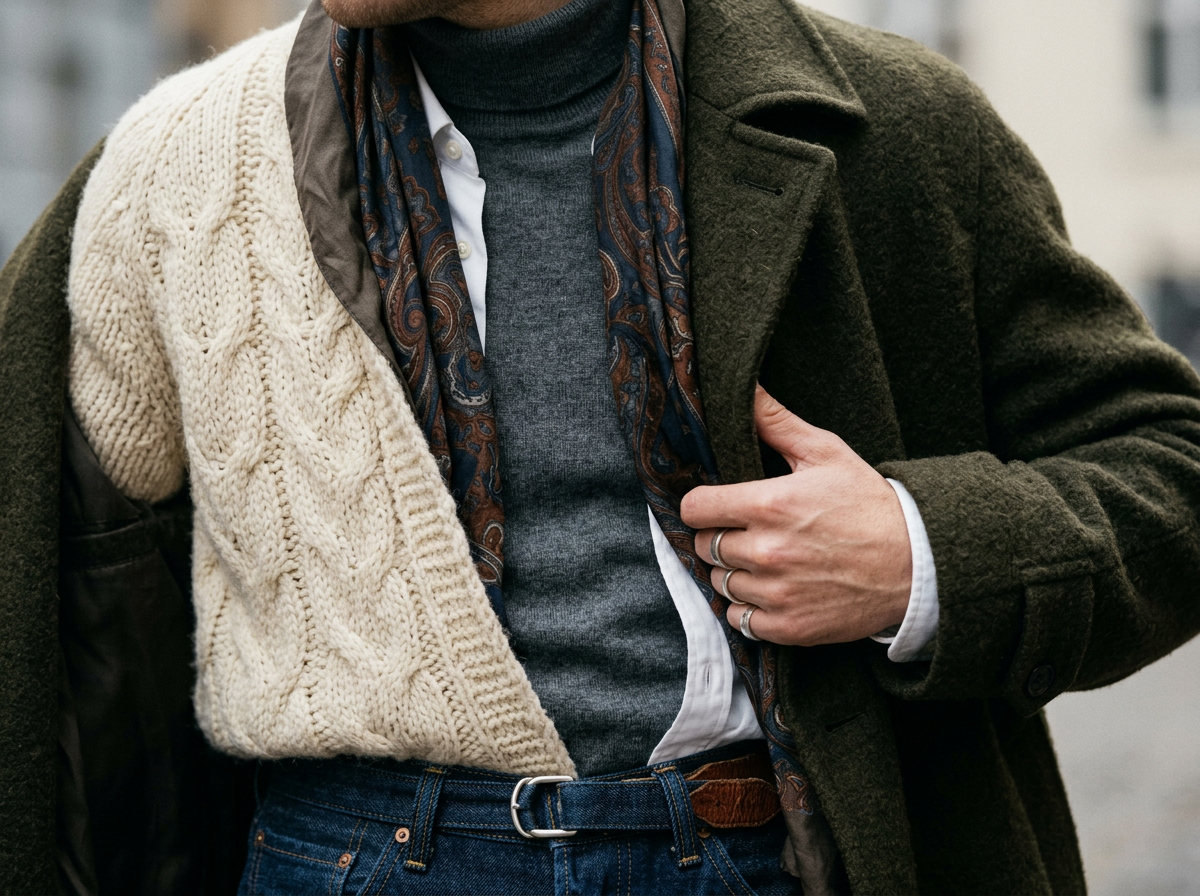
Raw straight-leg denim remains the foundational bedrock of an intentional, enduring wardrobe. Unlike pre-distressed alternatives, unwashed selvedge denim molds entirely to the wearer over time, offering a level of structure and tailored crispness that synthetic blends cannot replicate. Mastering this staple requires an understanding of textile weight, rise geometry, and the disciplined break-in process.
Fabric Density: Choosing the Right Ounce Weight
Rigid denim weight is measured in ounces per square yard, and this metric dictates drape, durability, and break-in commitment. For daily versatility, target mid-weight denim between 12 and 14 ounces. This weight yields an uncompromising, straight drape that holds its columnar shape without collapsing at the knee. Lighter iterations under 11 ounces often lack the sculptural rigidity required to balance soft knits and tailoring, whereas fabrics exceeding 15 ounces demand an arduous break-in period better suited to heritage workwear collectors.
Rise Geometry and Waistband Architecture
The architectural success of a straight-leg jean hinges on the balance between front rise and back pitch. A high rise measuring between ten and eleven and a half inches anchors the jean securely at the natural waist, elongating the silhouette while anchoring tucked-in poplin shirts or fine-gauge knits. Look for a curved, split waistband rather than a straight waistband, as the contoured cut prevents gaping at the lumbar spine without requiring synthetic elastane for compensation.

Leg Opening Proportions and Inseam Calibration
A true straight-leg cut maintains a uniform width from the mid-thigh down to the hem, ideally measuring between fourteen and sixteen inches in total circumference. This linear silhouette creates a clean, uninterrupted vertical line that accommodates everything from sharp point-toe ankle boots to flat almond-toe loafers. When determining the inseam, calculate whether you intend to cuff the selvedge ID or wear the hem clean; a slight half-break against the instep offers the most timeless proportion.
Wash Shades and Patina Development
Untreated indigo denim offers unmatched stylistic breadth, sitting comfortably between casual utility and semi-formal refinement. Deep, unwashed indigo behaves visually like navy wool suiting, making it the most versatile shade for structured blazer pairings. If you prefer a lighter profile, opt for an authentic ecru or unbleached natural cotton with visible slub texture rather than chemical acid treatments. Both tones retain a clean surface texture that elevates monochromatic dressing.
Styling Contrast: Balancing Rigidity with Refinement
The deliberate stiffness of raw denim requires thoughtful textural contrast in surrounding garments. Counterbalance the substantial weight of the 13-ounce cotton by tucking in a fluid silk crepe de Chine blouse or a gossamer tissue-weight merino knit. For outerwear, offset the workwear heritage of raw indigo with razor-sharp wool tailoring, such as an oversized single-breasted blazer or a fluid double-faced cashmere trench.
Care Protocols: Preserving Structure and Longevity
Preserving the integrity of raw denim necessitates minimal, calculated laundering. To maintain the crisp starch finish and deep indigo saturation, spot clean minor marks with cold water and air the garment out between wears. When a full wash is essential, turn the jeans inside out and submerge them in cold water with a gentle detergent formulated for dark textiles, avoiding the spin cycle entirely. Line dry in shade to prevent thermal shrinkage and fiber damage.