

Sculptural silver jewelry has replaced delicate micro-chains as the defining accessory of contemporary minimalist wardrobes. A single, weighty sterling cuff provides structural balance to soft knitwear and sharp suiting alike. Understanding how to gauge scale, metal finish, and anatomical fit ensures this statement piece complements rather than overpowers your personal silhouette.
Evaluating Proportion and Anatomical Fit
Finding the right cuff begins with inner circumference and opening gap measurements. A properly proportioned cuff should sit flush against the distal forearm without pinching the ulnar bone or sliding down to the knuckles. Look for pieces crafted from 925 sterling silver with a slight degree of malleability for custom adjustment, or rigid cast brass dipped in heavy rhodium for structural resilience. If your wrist measures under six inches, opt for tapered profiles with a maximum width of 1.5 inches to preserve arm mobility.
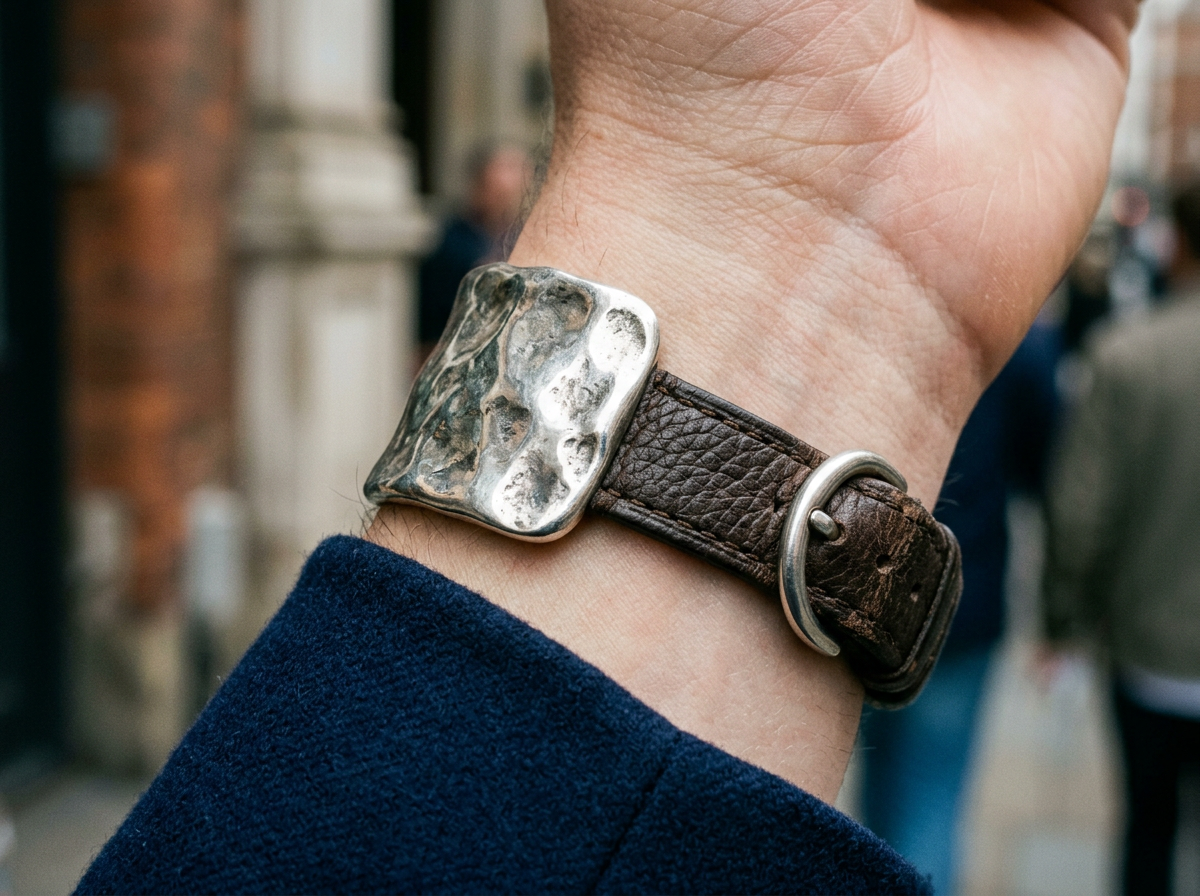
High-Shine Mirror Finish Versus Brushed Patina
The surface treatment of your silver determines its stylistic versatility and formal register. High-polish, mirror-finish silver creates a stark, modernist contrast against matte, heavy-weight fabrics like boiled wool, double-faced cashmere, and raw denim. Its reflective clarity draws immediate focus, functioning almost like wearable industrial design.
Conversely, brushed, satin, or hammered finishes introduce subtle depth, softening the cold undertones of the metal. These textured finishes are particularly forgiving with daily wear, masking minor scratches while pairing seamlessly with organic materials such as tumbled linen, supple calfskin leather, and slub cotton tees.

Layering Cuffs Over Knitwear and Shirting
The most compelling contemporary styling technique positions the cuff directly over the sleeve rather than against bare skin. Slip an open-back silver cuff over the forearm of a tissue-weight merino turtleneck or a ribbed silk-blend crewneck. This technique anchors loose or elongated sleeves, adding intentional structure to fluid layering.
For tailored button-down shirts, fasten the sleeve button and slide a broader cuff just above the fabric cuff placket. This creates an architectural cuff-link effect that frames the hand, especially effective when styling crisp poplin in optic white, pale blue, or fine banker stripes.
The Art of Intentional Metal Mixing
Monochromatic silver delivers clean, brutalist impact, but pairing cool-toned silver with warm yellow gold creates rich visual friction. The secret lies in maintaining consistent scale and weight rather than matching metal hues. Pair a substantial silver cuff with a chunky 18-karat gold signet ring or stacked dome rings on the opposite hand to establish balanced visual weight across your overall outfit.
Essential Preservation and Tarnish Prevention
Sterling silver naturally oxidizes when exposed to sulfur in the air, moisture, and ambient skin oils. Store your cuffs in individual micro-suede pouches or airtight anti-tarnish bags lined with intercept paper rather than open jewelry trays. Avoid spraying alcohol-based fragrances or applying rich hand creams directly before putting on your pieces.
For regular cleaning, avoid harsh chemical dips that strip away desirable shadow in recessed details. Use a two-ply professional jeweler polishing cloth, gently buffing in linear motions rather than circular strokes to maintain the integrity of high-polish surfaces and preserve the crisp edges of your jewelry.