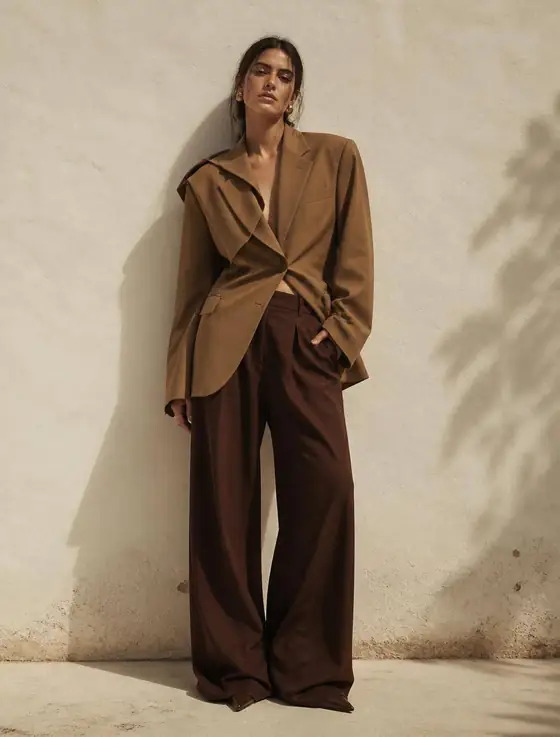
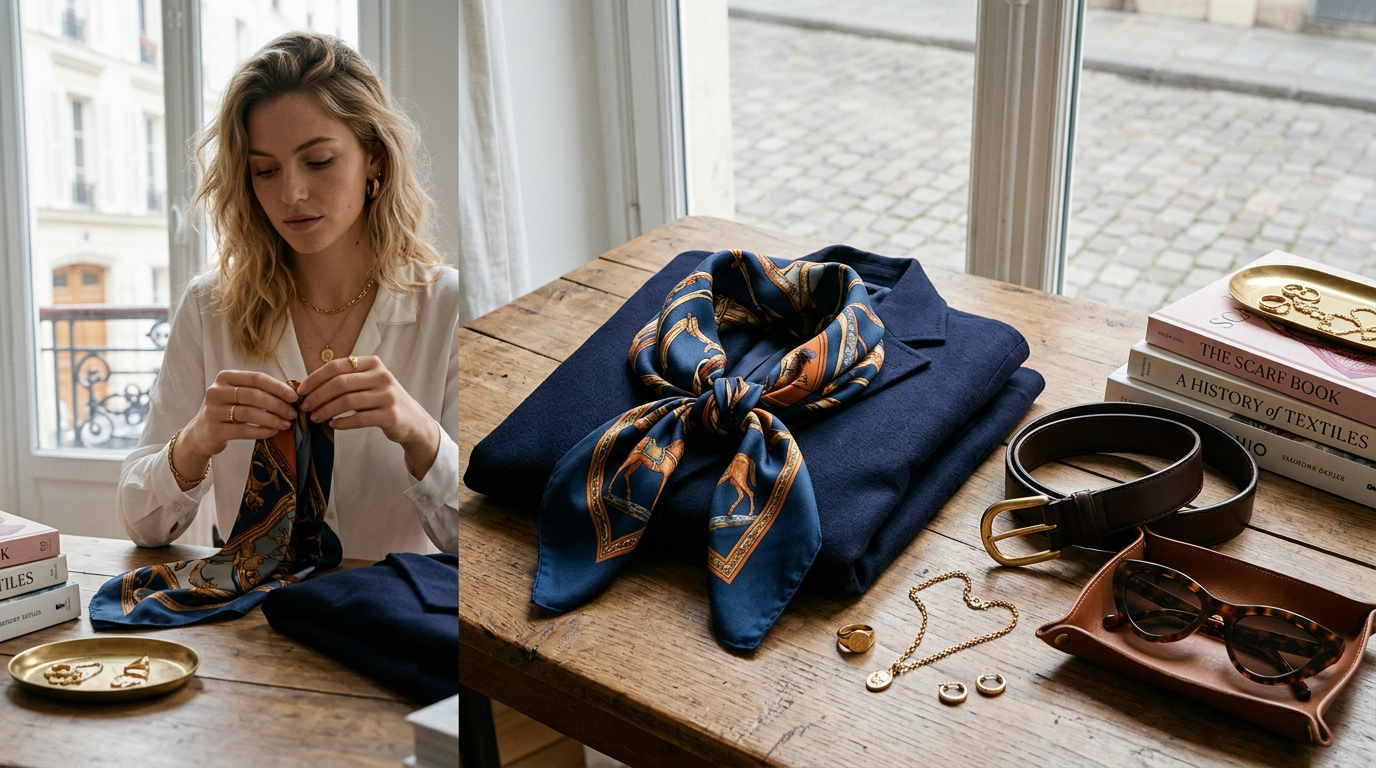
The classic 90-centimetre silk twill scarf has transitioned from heritage staple to a sharp, structural accent in contemporary wardrobes. When deployed with intention, silk twill introduces tactile contrast, precise geometric folds, and deliberate colour play to tailored foundations. Mastering this versatile accessory requires understanding silk weights, executing balanced drape techniques, and adhering to strict textile care protocols.
Selecting the Ideal Weight: Twill Versus Habotai
The success of any scarf silhouette hinges on fabric structure. Silk twill, characterized by its subtle diagonal weave, offers the ideal tension between fluidity and stiffness. A standard 14 to 16 momme twill retains crisp folds, allowing structured knots to hold their shape throughout the day without collapsing into the neckline. The heavier weight also prevents sharp corners from curling awkwardly against coarse wool or cotton fabrics.
In contrast, lightweight habotai or chiffon lacks the body required for modern architectural folds. While sheer weaves work well as loose summer wraps, they quickly lose definition when knotted closely. To achieve clean lines with tailoring, always opt for dense mulberry silk twill finished with hand-rolled, hand-stitched hems, which provide necessary structural weight along the perimeter.
The Asymmetric Bandana Fold for Relaxed Tailoring
To offset the traditional feel of a square scarf, use an asymmetric bandana knot paired with modern casuals. Fold a 70-centimetre or 90-centimetre square diagonally into a large triangle, then roll the long edge inward twice to create a clean upper border. Drape the point flat across the chest, wrap the ends behind the neck, and bring them back around to tie a small, off-centre square knot just below the collarbone.
This configuration works seamlessly under an oversized double-breasted blazer worn open over a crisp white crewneck tee. The triangular drape softens the sharp lapels while breaking up neutral monochrome palettes. For a balanced proportion, ensure the point of the triangle rests no lower than the midpoint of the sternum.

The Minimalist Neckerchief with Structured Outerwear
A slim, tightly wrapped neckerchief offers a streamlined alternative to bulky winter scarves when styled with heavy wool coats. Fold the square scarf diagonally, then repeatedly fold from the apex inward until you achieve a flat band roughly four centimetres wide. Wrap the ribbon snugly around the neck twice and secure it with a neat, concealed knot tucked beneath the fold.
Position this look inside a stand-collar car coat or a structured trench. The narrow strip of silk adds a sliver of pattern and smooth friction protection between sensitive neck skin and coarse melton wool. To maintain an editorial aesthetic, keep the ends tucked entirely away rather than letting them flutter loosely.
Securing Silk to Leather Handbags and Structured Totes
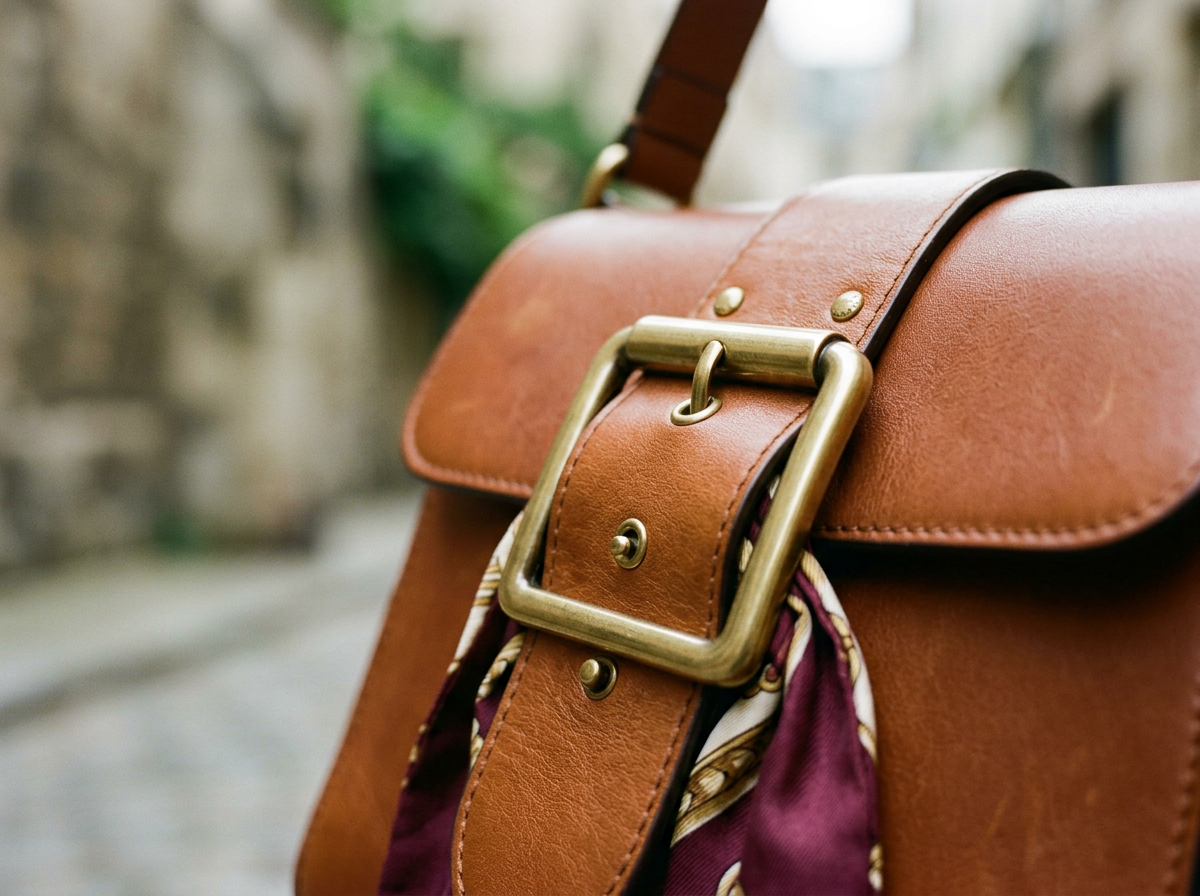
Integrating silk scarves onto leather goods requires deliberate placement to avoid looking cluttered. Avoid wrapping the entire top handle of a handbag unless you specifically need to protect delicate untreated leather from natural skin oils. A more contemporary approach is the simple single-loop hitch around the base of the handle hardware.
Fold a 45-centimetre gavroche into a narrow strip, thread it through the metal ring of a structured leather tote, and knot once close to the base, allowing the two tails to hang at uneven lengths. The matte sheen of box calfskin provides an exquisite backdrop for vibrant printed twill, introducing movement to rigid geometric bags.
Colour and Pattern Selection for Neutral Capsules
Selecting patterns for a minimalist wardrobe requires focusing on scale and tonal restraint. High-contrast equestrian motifs or sprawling botanical illustrations work best when anchored by a dark neutral border, such as black, navy, or deep chocolate. This perimeter frame prevents the pattern from bleeding chaotically into surrounding outerwear.
If your wardrobe consists primarily of cool tones like charcoal, optic white, and navy, opt for scarves with cobalt, burgundy, or acid-chartreuse accents to inject precise points of interest. For warm camel and olive tailoring, earthy terracotta, ochre, and warm ivory prints deliver cohesive depth without clashing.
Washing, Steaming, and Long-Term Preservation
Silk is an organic protein fibre that degrades when exposed to heat, alcohol-based perfumes, and improper laundering. Never spray perfume directly onto silk twill, as the alcohol can strip dyes and create permanent water rings. For routine maintenance, steam the fabric from a distance of several inches rather than pressing it flat with a hot dry iron, which will crush the hand-rolled edges.
When cleaning is required, professional dry cleaning is recommended for high-momme printed scarves to preserve the crispness of the twill. For storage, fold the scarf along its original creases and place it inside a breathable cotton storage pouch or an acid-free box. Avoid hanging silk scarves over wire or wooden hangers, as gravity and narrow contact points can permanently stretch the weave out of square.