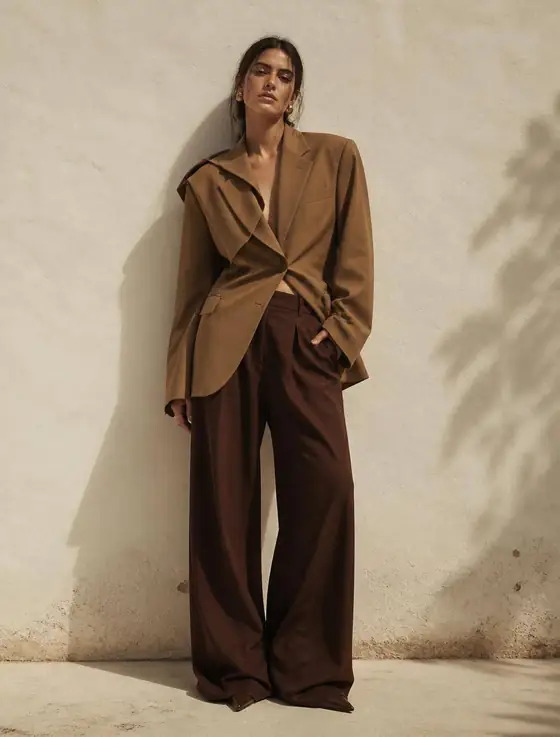
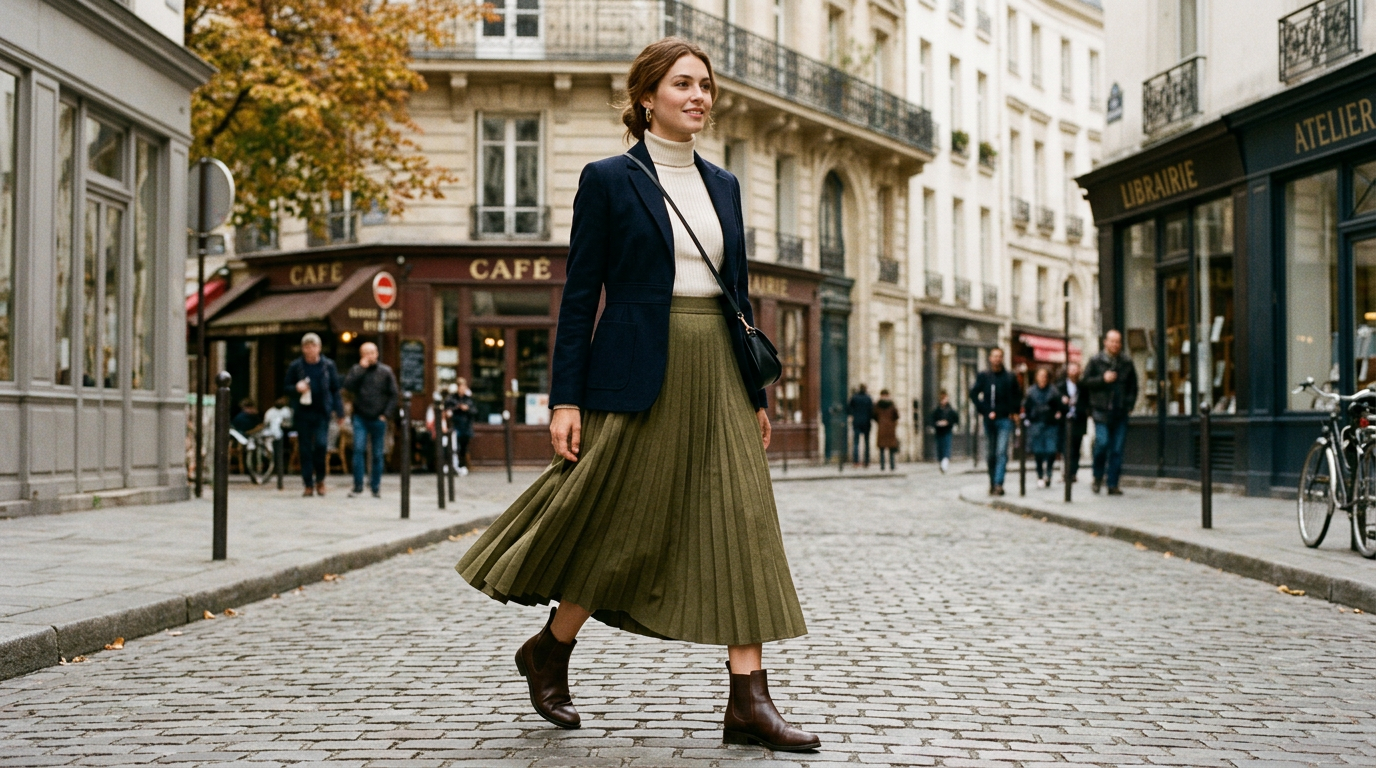
The pleated midi skirt remains an enduring pillar of transitional dressing, combining kinetic structure with precise sartorial polish. Achieving a sharp, flattering silhouette requires careful evaluation of fabric composition, pleat geometry, and hem proportions rather than merely relying on trend cycles. When executed with high-density textiles and proper waistband architecture, this versatile staple effortlessly anchors both relaxed daytime tailoring and sharp evening ensembles.
Deciphering Pleat Geometry: Knife, Accordion, and Sunray
The architecture of a pleat dictates how the garment moves, drapes, and holds volume across the hips. Knife pleats feature sharp, unidirectional folds that overlap evenly, creating a clean, disciplined surface that lies remarkably flat against the body. This structure makes knife pleats the ideal choice for professional environments and tailored wardrobes, as the uniform directional fold prevents unwanted bulk across the abdomen and upper thighs.
Conversely, accordion pleats are engineered with symmetrical, alternating zig-zag folds that expand dramatically in motion. When cut into an A-line shape, accordion pleats produce a sweeping hemline with considerable flare. Sunray pleats, which radiate outward from a narrower waist to a wider hem, introduce fluid movement that skims curves without adding circumference at the midsection, making them exceptionally flattering across various body types.
Textile Composition and Heat-Set Retention
The performance of a pleated skirt depends fundamentally on fabric memory. Natural fibers like pure wool, lightweight silk, and cotton lack thermoplastic properties, meaning permanent pleating requires specialized chemical treatments or synthetic blending. High-grade polyester blends, technical wool crepes, and triacetate textiles remain the industry standard because they hold sharp, heat-set creases through repeated wear and cleaning cycles without softening into unstructured folds.
Fabric weight directly impacts drape and seasonal functionality. A substantial wool-blend twill weighing 280 to 350 grams per square meter provides clean vertical lines and wind-resistant structure suitable for autumn and winter. For warmer climates or layered spring aesthetics, opt for heavy silk twill, structured georgette, or coated faux leather, ensuring the material possesses enough internal density to keep pleats crisp rather than flyaway.

Waistband Construction: Fixed Versus Elasticated Architecture
The waistband serves as the structural foundation of any pleated garment, directly determining its drape and profile. Fully elasticated, gathered waistbands often bunch pleats unevenly around the midsection, disrupting the smooth vertical lines of the skirt. For a streamlined silhouette, prioritize a tailored, flat-front waistband with a concealed side or back zip. A structured waistband measuring 3 to 5 centimeters cleanly anchors the folds, allowing them to release smoothly below the natural waistline.
If ease of movement requires flexibility, seek hybrid waistbands that feature a clean, fused front facing and an internal elasticized rear insert. This construction delivers the comfort of stretch without sacrificing the flat, tailored look essential for tucking in fine-gauge knits or crisp shirting.
Balancing Proportions: Hemlines and Footwear Pairings
Proportion is crucial when styling a mid-calf hemline. The hem should hit the narrowest point of the lower leg, typically just below the widest part of the calf muscle, to elongate the lower body. Pairing a pleated midi with footwear requires deliberate contrast in volume. Pointed-toe knee-high leather boots that disappear neatly under the hem create an uninterrupted vertical line, streamlining the silhouette during colder months.
For transitional weather, contrast the skirt's fluid pleating with structured footwear such as pointed-toe slingbacks, minimalist kitten heels, or streamlined leather loafers. Avoid ankle-strap shoes that cut across the leg horizontally, as they break the visual continuity established by the linear pleats.
Strategic Styling: Upper-Body Volume and Texture Contrasts
Styling a pleated midi skirt requires balancing volume and tactile contrast. Because the lower half of the garment inherently introduces texture and kinetic energy, the upper half should provide structured grounding. A close-fitting ribbed merino turtleneck or a structured, single-breasted blazer tucked or belted at the waist creates a defined silhouette that counterbalances the skirt's flare.
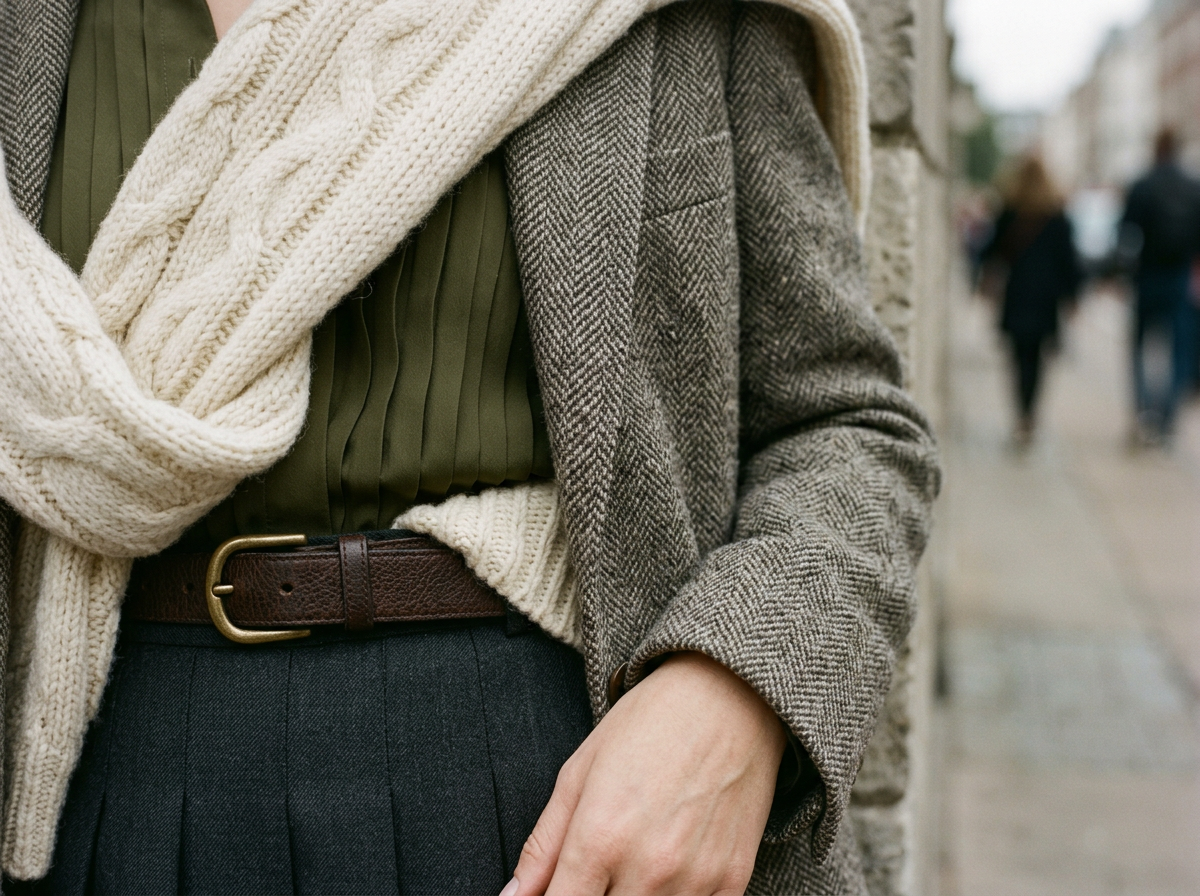
To achieve a contemporary aesthetic, lean into heavy tactile contrasts. Pair a featherlight sunray pleated georgette skirt with an oversized, chunky-knit cashmere crewneck, partially tucking the front hem to preserve the waistline. Alternatively, juxtapose a sharp knife-pleated skirt with an unbuttoned poplin shirt over a fitted tank, anchoring the ensemble with a classic leather belt.
Garment Care: Preserving Pleat Definition and Shape
Maintaining crisp pleat definition requires proper storage and laundry discipline. Always hang pleated skirts by the internal waistband loops using clamp hangers rather than standard clip hangers, which can crush the pleats and leave permanent indentations on the textile. Store the skirt with adequate space inside your wardrobe to prevent neighboring garments from flattening the sharp creases.
Never iron over pleated folds with a standard flat iron, as this can easily distort the crease alignment and create irreversible shine marks on synthetic blends. Instead, use a vertical garment steamer held several inches away from the fabric, allowing gravity and gentle steam to release surface wrinkles while keeping the engineered pleats intact. For structured wool skirts, periodic professional dry cleaning is recommended.