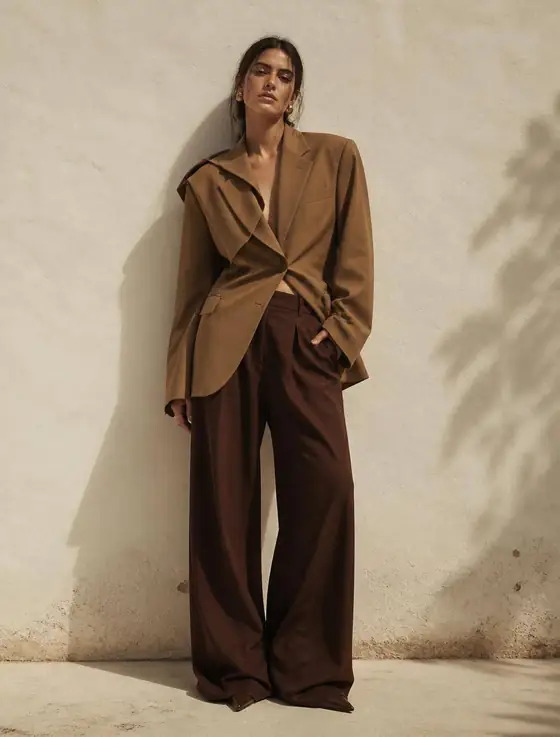
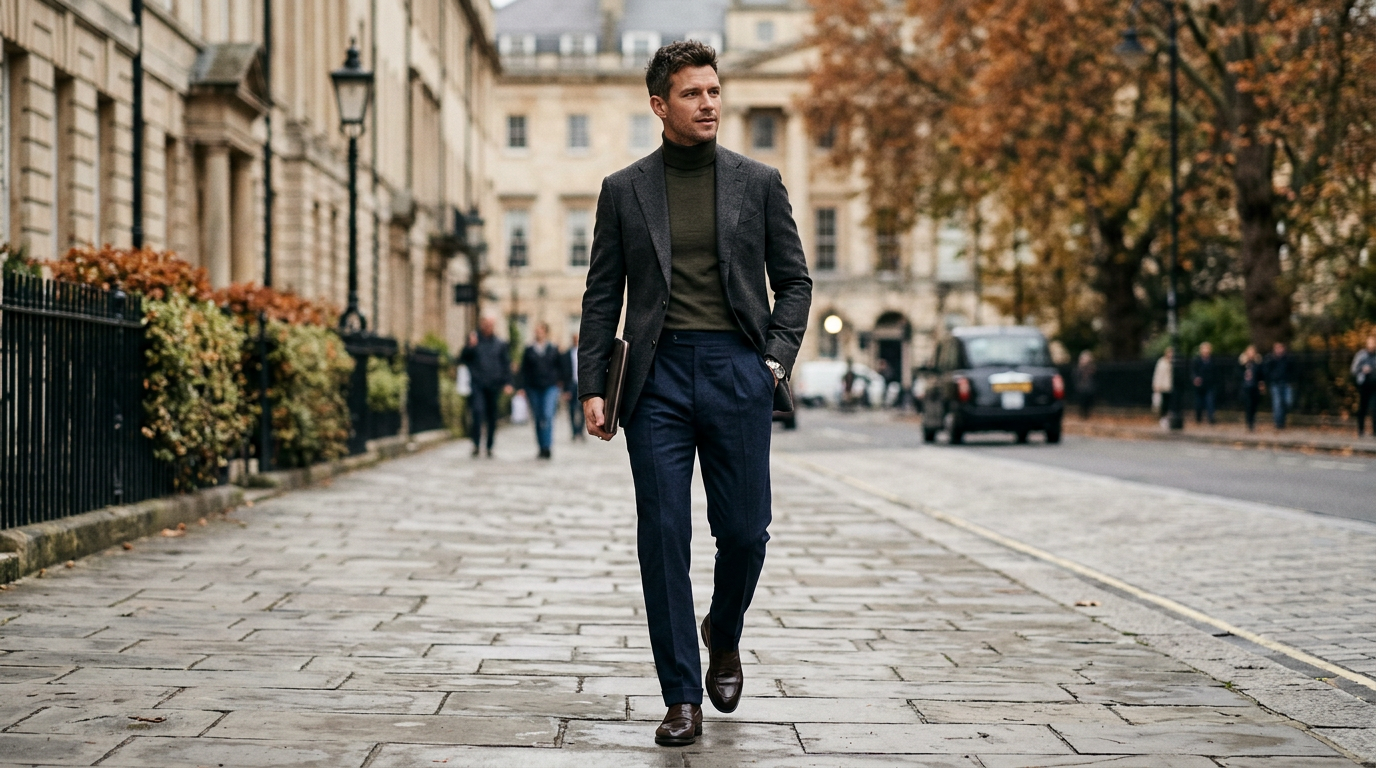
For years, menswear focused intensely on jackets while treating trousers as an afterthought. Today, modern proportions dictate that the cut, rise, and drape of your trousers anchor the entire silhouette. Understanding how cloth weights, waist heights, and pleat structures interact allows you to build a foundation that elevates everything from knitwear to formal tailoring.
The Anatomy of Rise and Waist Positioning
The rise measures the distance from the crotch seam to the top of the waistband, directly determining where trousers sit on the torso. Low-rise trousers sit on the hips, truncating the legs and disrupting the visual harmony of a tailored jacket. A mid to high rise rests near the natural waist or just below the navel, creating an uninterrupted vertical line that elongates the leg and balances the torso.
Choosing the correct rise depends on your body proportions. Shorter men benefit immensely from a medium-high rise, which creates the optical illusion of longer limbs. Taller frames can wear standard mid-rises without appearing disproportionate. Look for extended tab closures and side adjusters rather than belt loops, which provide a cleaner line around the waistline.
Pleats Decoded: Forward, Reverse, and Flat Fronts
Pleats are functional tailoring tools engineered to distribute fabric across the hips and thighs when sitting, preventing tension across the front pockets. Forward pleats fold inward toward the fly, offering a classic English profile that creates an exceptionally clean front line. Reverse pleats fold outward toward the pockets, typical of Italian tailoring, producing a slightly more relaxed look.
Flat-front trousers remain popular for their minimalist appeal, but they require precise sizing to avoid pocket flare and pulling across the seat. If you have athletic thighs or a fuller seat, a single forward pleat introduces necessary ease without adding unwanted volume, ensuring clean lines both in motion and at rest.

Fabric Selection: Flannel, Twill, and High-Twist Wool
The cloth dictates how cleanly a trouser hangs from the hip to the hem. Lightweight synthetic blends often cling and wrinkle, destroying the vertical crease. For autumn and winter, wool flannel weighing between 340 and 400 grams provides tactile warmth and a soft, matte finish that drapes with authoritative weight. Cavalry twill and heavy cotton whipcord offer rugged resilience and distinct diagonal textures.
For warmer seasons, high-twist tropical wool, often referred to as fresco, allows air circulation while resisting wrinkles due to its open, porous weave and resilient yarn tension. Linen-wool blends provide the breathability of bast fibres balanced by the structural memory and wrinkle resistance of wool.
Leg Taper, Hem Width, and Turn-Ups
A flattering trouser features a subtle taper from the widest point of the thigh down to the hem opening. Extreme tapers with narrow leg openings create a top-heavy carrot silhouette that clashes with classic shoes. Aim for a hem opening between 7.75 and 8.5 inches, depending on your shoe size, allowing the fabric to fall neatly over the instep.
A tailored turn-up, or cuff, adds practical ballast to the bottom of the trouser leg, pulling the fabric taut to maintain a razor-sharp vertical crease. Standard turn-ups should measure 1.75 inches for balanced proportions, though taller individuals can comfortably wear a 2-inch cuff. Flat-front casual cotton trousers work best without cuffs, finished with a clean, slight break.
Styling Separates Across Dress Codes
High-quality trousers excel as standalone statement pieces when paired with casual outerwear and knitwear. Charcoal wool flannel trousers soften the formality of tailored jackets when paired with a fine-gauge merino turtleneck and suede Chelsea boots. Olive or taupe high-twist wool trousers transition seamlessly into casual settings alongside an unstructured navy chore coat and leather loafers.
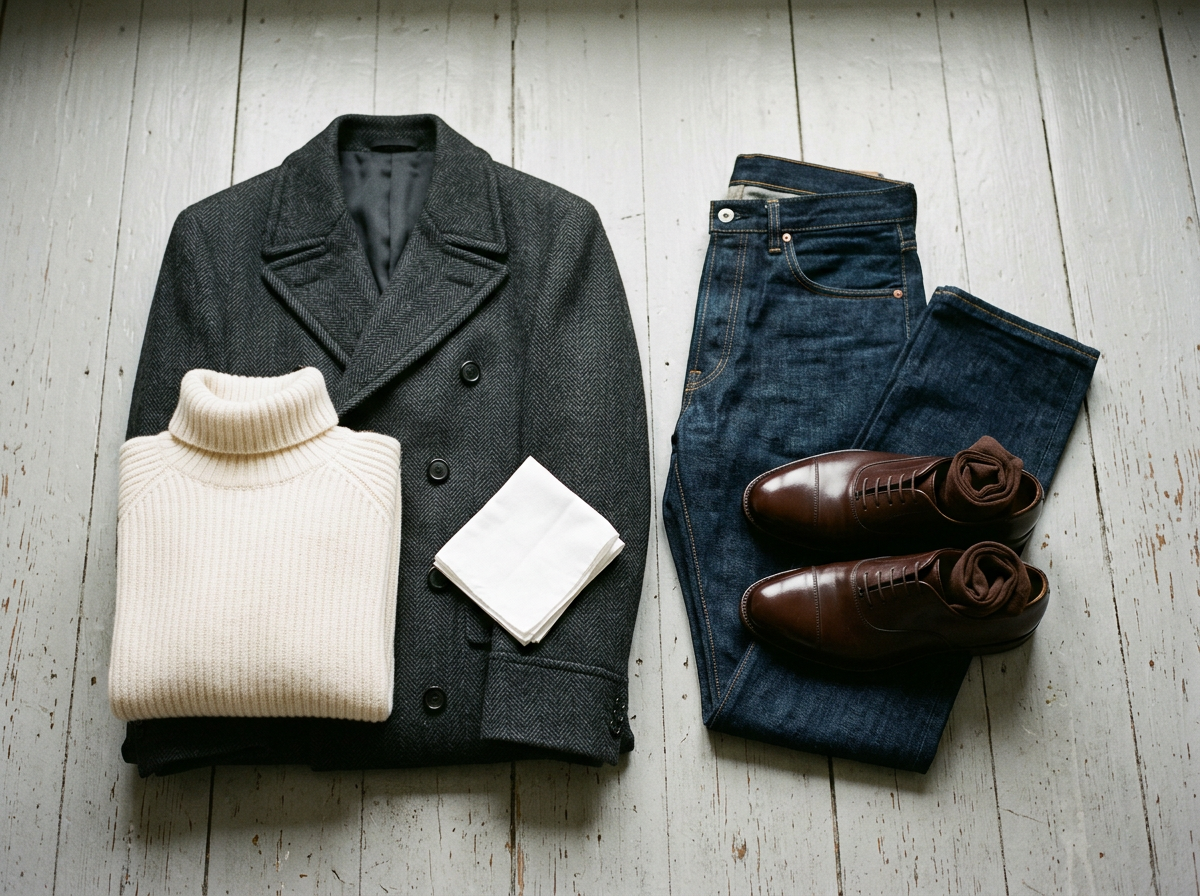
Treat tailored trousers as an upgrade to everyday denim. A pair of cream corduroy or navy cavalry twill trousers paired with an Oxford cloth button-down and a suede bomber creates an elevated casual look that feels intentional, comfortable, and visually refined.
Maintenance, Pressing, and Garment Care
Preserving the integrity of fine trousers requires minimal chemical processing and mindful daily care. Avoid dry cleaning wool trousers more than twice a season, as harsh solvents strip natural lanolin from the yarns. Instead, use a natural boar-bristle garment brush after each wear to lift surface dust and release trapped fibres before resting the trousers for at least twenty-four hours.
Hang trousers upside down from the hem using felt-lined clamping hangers to allow gravity to pull out minor wear creases. Restore the sharp front and back creases by dampening a pressing cloth and using a medium-hot iron with moderate steam, ensuring you never place the direct metal iron plate onto the wool fabric.