A well-crafted leather jacket remains the definitive cornerstone of enduring menswear, bridging utilitarian heritage with refined rebellion. Navigating the spectrum of hides, construction methods, and iconic silhouettes requires a discerning eye for how distinct leathers drape, break in, and age. Investing in the correct piece guarantees a lifetime of character rather than seasonal obsolescence.
Understanding Hides: Cowhide, Lambskin, and Horsehide
The choice of animal hide dictates the weight, durability, and eventual patina of your jacket. Full-grain cowhide offers exceptional abrasion resistance and structural heft, making it the benchmark for rugged utility, though it requires a dedicated break-in period. Horsehide provides a denser, stiffer grain with a deep, natural luster and unmatched durability, historically favored for authentic heritage workwear. Conversely, vegetable-tanned lambskin delivers immediate suppleness and lightweight drape, lending itself to tailored, urban silhouettes that prioritize comfort from day one.
When assessing quality, examine the tanning method and surface finish. Vegetable-tanned leathers age organically, developing rich tonal variations through exposure to sunlight and natural oils. Chrome-tanned hides yield a uniform color, enhanced water resistance, and softer initial hand feel. Avoid corrected-grain leathers that mask natural hide imperfections under synthetic polymer coatings, as these will crack over time rather than develop an authentic, nuanced patina.
The Core Silhouettes: Rider, Racer, and Flight
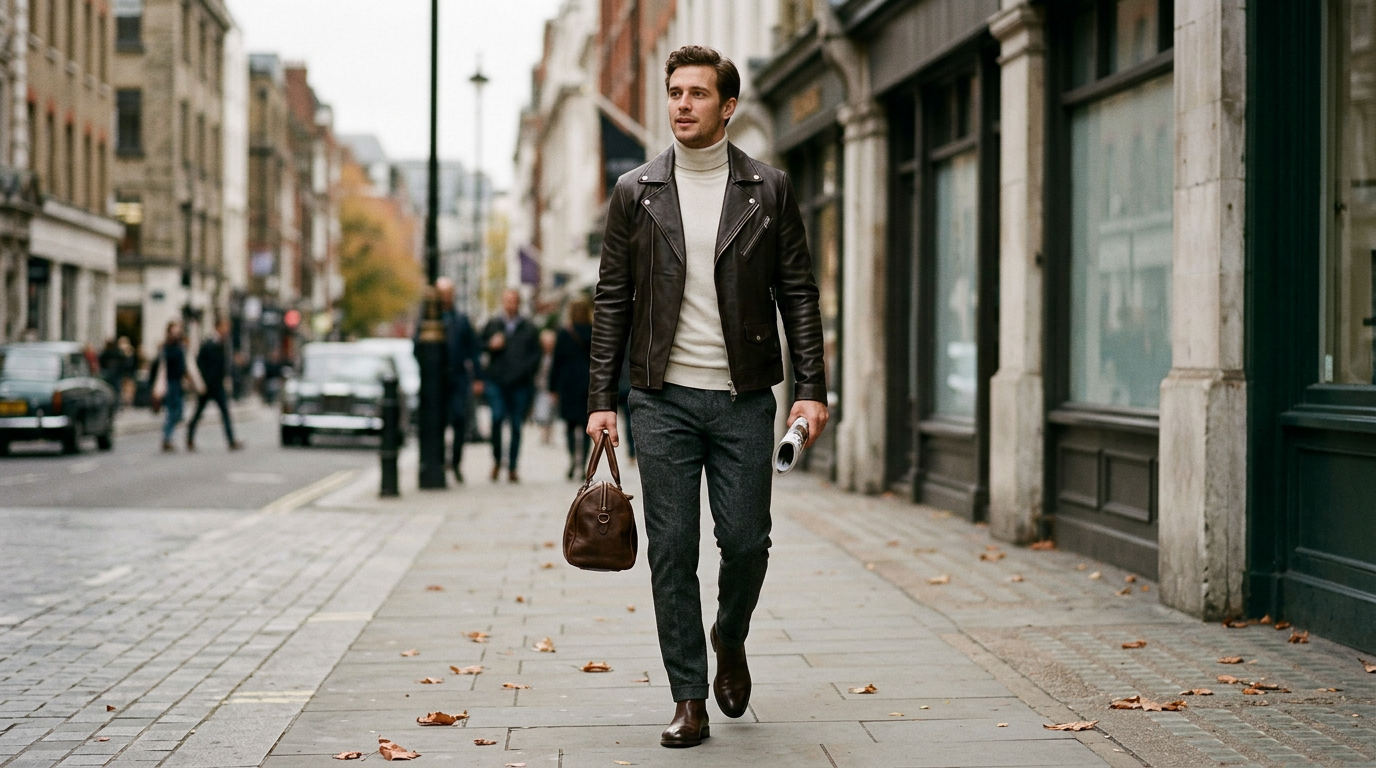
Every iconic leather jacket silhouette evolved from specific functional demands. The double rider, defined by its asymmetric front closure, wide lapels, and belted waist, offers maximum wind protection and an inherently rebellious edge. The minimalist cafe racer, or moto jacket, features a streamlined center-zip closure, stand collar with snap throat-latch, and clean chest pockets, making it the most versatile cut for modern, understated wardrobes. The A-2 and G-1 flight jackets offer structured shoulders, ribbed wool cuffs, and flap utility pockets, anchoring heritage-inspired casual ensembles.

Construction, Hardware, and Interior Linings
The longevity of a leather jacket relies as heavily on its internal architecture as its outer shell. Look for heavy-gauge brass or nickel hardware from reputable manufacturers like YKK, Talon, or RiRi, which withstand constant tension without catching or stripping. Reinforced pocket welts, clean double-needle stitching, and articulated shoulder gussets indicate superior benchcraft designed for unrestricted movement.
Linings directly affect warmth and garment drape. Natural cotton twill linings offer breathability for mid-weight jackets, while heavy quilted wool or genuine shearling linings deliver essential insulation in winter flight jackets. In refined, slimmer moto jackets, cupro or viscose sleeve linings ensure the jacket glides effortlessly over knitwear and shirting without friction or static buildup.
Fit Geometry and Layering Strategy
A leather jacket should fit snugly across the upper torso upon purchase, as the natural fibers will relax and mold to your proportions through body heat and movement. The shoulder seams must align precisely with the natural edge of your acromion bone to avoid excess bulk. Ensure the sleeve cuffs terminate just past the wrist bone to accommodate bent-arm reach without riding up.
Consider your intended layering foundation when determining chest allowance. If you plan to layer chunky lambswool knitwear or heavy sweatshirts underneath, size up slightly to accommodate the volume. If your aesthetic favors fine-gauge merino knits, crisp poplin shirts, or raw silk tees, a tailored, body-skimming profile will maintain clean vertical lines without pulling across the back.
Styling Formulations Across Dress Codes
Integrating a leather jacket across diverse settings requires deliberate balance in texture and proportion. Pair a clean black cafe racer with charcoal flannel trousers, a charcoal cashmere crewneck, and polished Chelsea boots to construct an elevated, minimalist evening uniform. The sharp lines of the tailored trouser counterbalance the rugged demeanor of the leather.
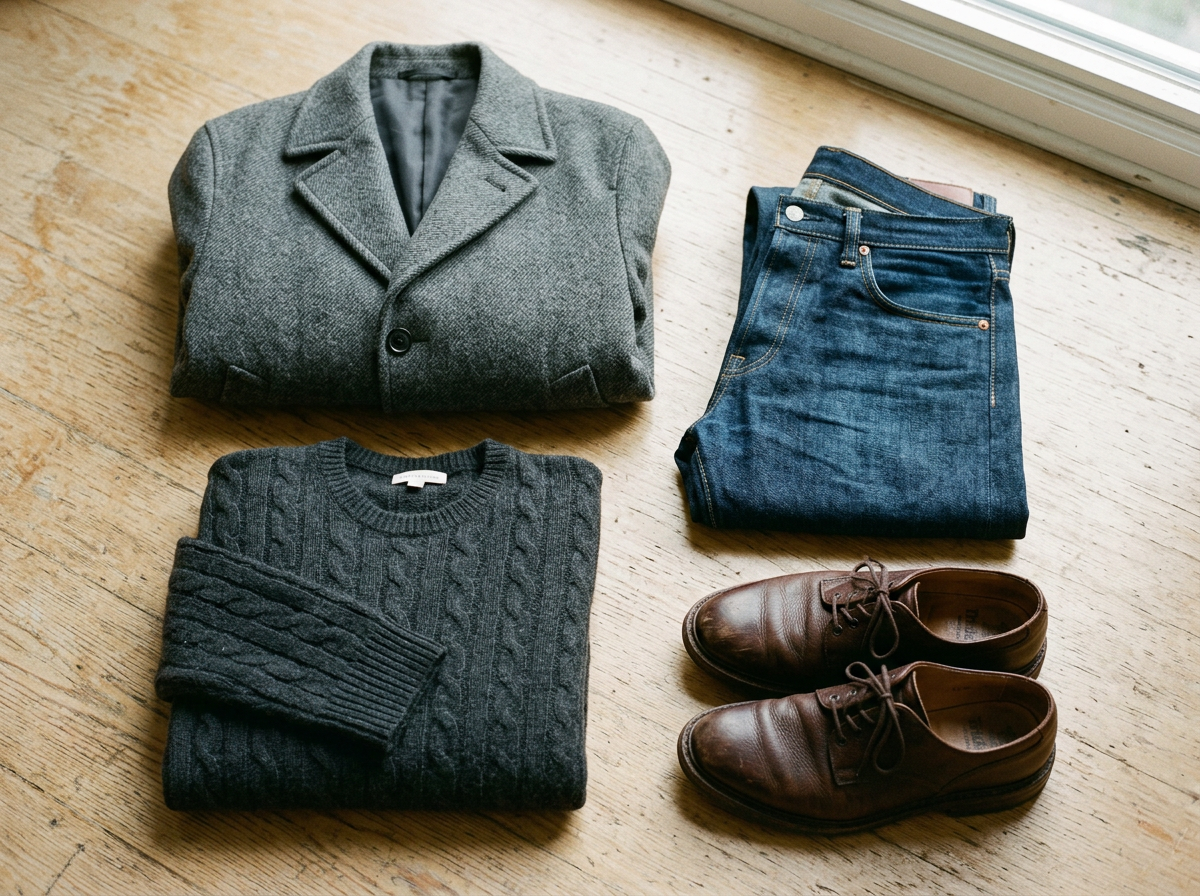
For relaxed daytime wear, layer a rich espresso-brown flight jacket or double rider over an ecru waffle-knit thermal, mid-wash selvedge denim, and welted service boots. The juxtaposition of smooth leather, textured cotton, and stiff indigo creates a visually compelling ensemble rooted in classic mid-century utilitarian style.
Conditioning, Weatherproofing, and Long-Term Care
Routine maintenance protects the natural lipids in the hide from drying out. Treat your jacket once or twice annually with a specialized, wax-free leather conditioner such as Saphir Medaille d'Or or Bick 4, using a soft microfibre cloth to distribute the product evenly across high-friction areas. Avoid heavy petroleum-based greases that clog pores and compromise the hide's breathability.
If caught in heavy rain, allow the jacket to dry naturally at room temperature away from direct heat sources and radiators, which cause leathers to shrink and desiccate. Always store the garment on a broad, contoured wooden coat hanger to preserve the shoulder integrity and prevent the collar from collapsing during off-season storage.