
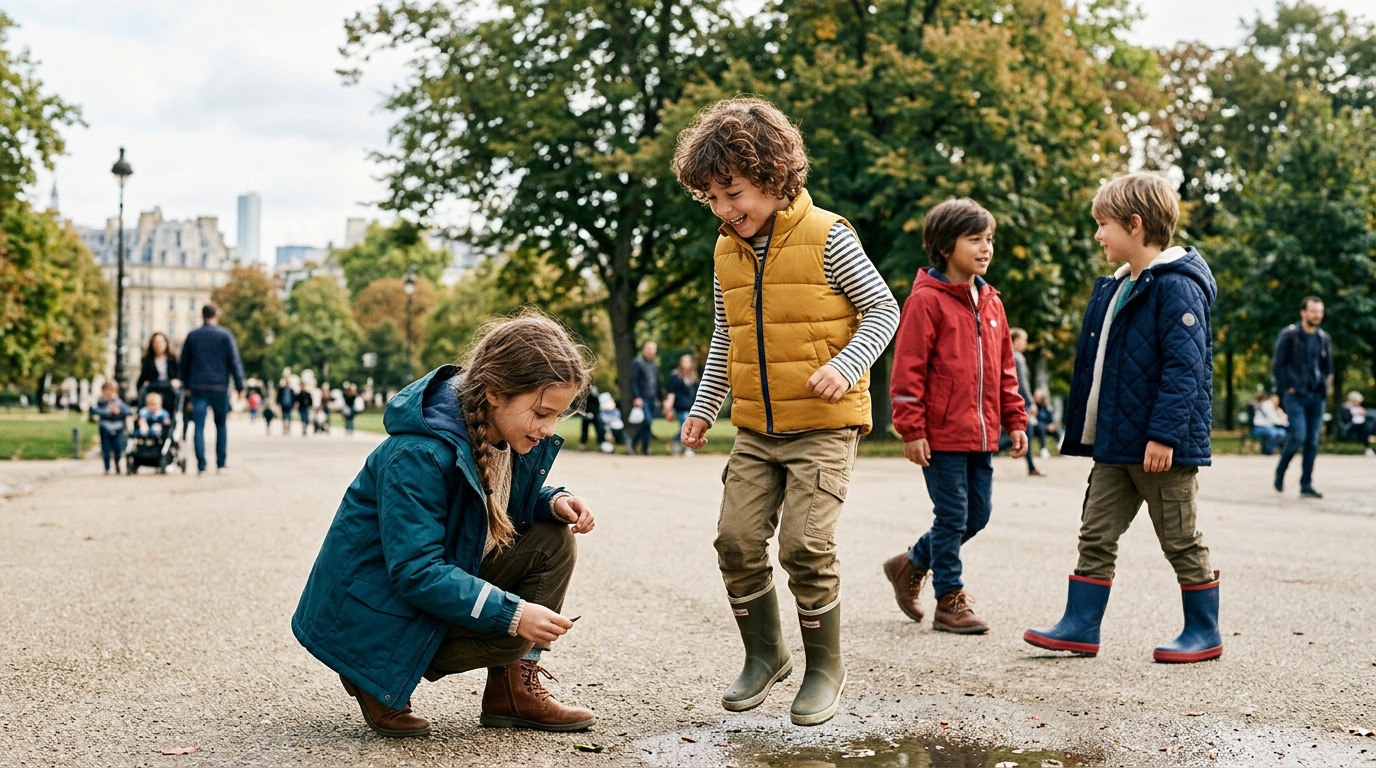
Dressing children for wet and cold weather demands a delicate balance between technical protection and unrestricted movement. High-performance outerwear must withstand rough playground abrasion while maintaining internal breathability to prevent overheating. By understanding waterproof ratings, insulation types, and ergonomic construction, parents can invest in garments that perform across multiple seasons.
Deciphering Waterproof Ratings and Membrane Technology
When evaluating rainwear and winter parkas, look past basic water resistance to examine the hydrostatic head rating. A minimum rating of 5,000 millimeters is adequate for light drizzle, but active play in heavy rain requires 10,000 millimeters or higher. Fully taped seams are critical; garments with only critically taped seams will leak through shoulders and armholes during prolonged downpours. Seek out PFC-free durable water-repellent finishes applied to tightly woven recycled polyester shells, which shed exterior moisture while supporting environmental sustainability.

Selecting Insulation: Down Versus Technical Synthetics
Choosing the proper insulation depends largely on regional climate and activity levels. Responsibly sourced down with a 650-fill power offers exceptional warmth-to-weight ratios for dry, freezing conditions, compressing easily into backpacks. However, for variable weather involving sleet or wet snow, advanced synthetic insulations like PrimaLoft or blown polyester microfibers are superior. Synthetic fills retain their thermal loft even when saturated, dry rapidly on low heat cycles, and tolerate frequent machine washing far better than natural plumage.

Ergonomic Design Features for High-Mobility Play
A garment's technical prowess means little if it restricts climbing, running, or cycling. Prioritize outerwear featuring articulated knees and raglan sleeve construction, which prevent the hem from riding up when arms are raised. Look for storm flaps secured by low-profile snap buttons over heavy-duty YKK two-way zippers, preventing wind penetration. Soft microfleece chin guards eliminate zipper chafing, while internal ribbed thumbhole cuffs prevent cold drafts and snow ingress between gloves and sleeves.
Strategic Layering Under Technical Shells
Outerwear performs optimally only when paired with a coherent base and mid-layer system. Eliminate heavy cotton sweatshirts and tees, which absorb perspiration and cause rapid chilling during rest periods. Instead, dress children in an ultra-fine 200gsm Merino wool or modal base layer that actively wicks moisture. Add a lightweight grid-fleece or boiled wool cardigan as an insulating mid-layer, allowing easy temperature regulation as children move between heated classrooms, transit, and open playgrounds.
Sizing Longevity and Growth-Extension Features
Given the pace of childhood growth spurts, selecting functional sizing requires foresight without resorting to overly baggy silhouettes that impede movement. Seek premium brands offering integrated growth systems, where an internal contrast stitch on sleeve and pant linings can be released to yield an extra inch and a half of length. Reinforcement patches crafted from 500-denier Cordura on high-friction zones such as knees and seat panels ensure outerwear lasts long enough to pass down through siblings.
Maintenance Protocols for Technical Coatings
Preserving technical outerwear requires gentle, specific care routines rather than standard laundry cycles. Never use conventional powder detergents or fabric softeners, as surfactants clog breathable microporous membranes and strip water-repellent treatments. Wash garments closed and inside out using specialized technical washes like Nikwax Tech Wash. Reactivate the factory exterior coating by tumbling the garment on low heat for twenty minutes, or apply an eco-friendly spray-on proofer once water ceases to bead on the surface.