A well-curated knitwear rotation bridges the gap between structured tailoring and casual dressing with effortless sophistication. Understanding fiber composition, yarn ply, and gauge is essential for selecting pieces that hold shape, regulate temperature, and drape cleanly. This guide breaks down the technical elements and styling formulas required to elevate your knitwear collection.
Decoding Yarn Fibers: Merino, Cashmere, and Alpaca
The foundation of superior knitwear begins with natural fibers. Extra-fine merino wool, measured at 19.5 microns or less, provides natural thermoregulation, moisture-wicking properties, and exceptional elasticity, making it ideal for daily office wear. Grade-A Mongolian cashmere, derived from the dense underfleece of cashmere goats, yields unmatched softness and lightweight warmth. For rugged winter texture, alpaca and lambswool offer substantial loft and weather resistance, though they benefit from being worn over a soft base layer to eliminate skin irritation.
Understanding Gauges: From Fine 30-Gauge to Chunky 5-Gauge
Gauge refers to the number of stitches per inch on a knitting machine, directly dictating garment weight, drape, and visual texture. Ultra-fine 24-gauge and 30-gauge knits yield a smooth, flat surface that slips effortlessly beneath a tailored sport coat without adding excess bulk around the armholes. Medium 12-gauge to 14-gauge knits offer standard crewneck versatility for transitional seasons. Heavy 5-gauge and 7-gauge knits produce tactile textures like fisherman ribs and cable weaves, designed for standalone outerwear or rugged weekend layering.

The Essential Crewneck and V-Neck Silhouettes
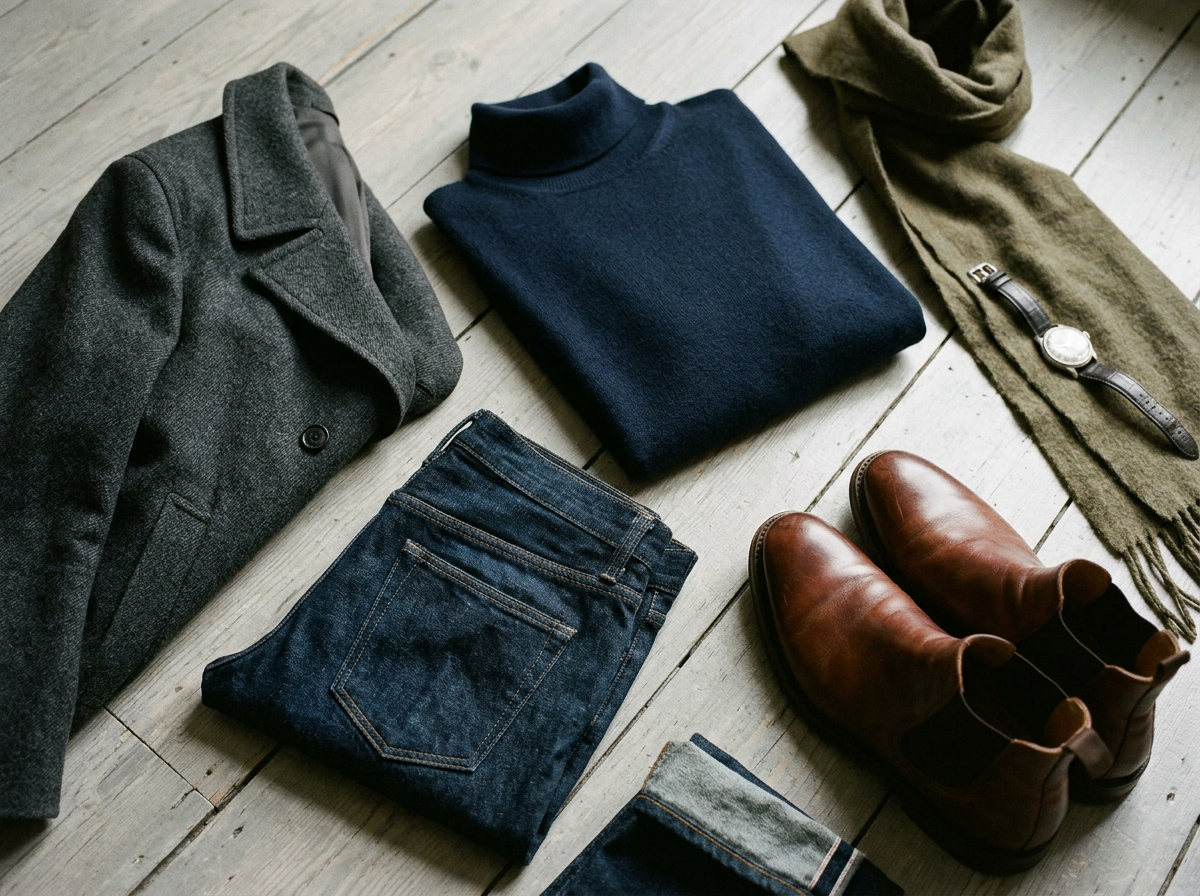
The classic crewneck remains the most versatile silhouette in modern menswear. Look for a tightly bound neck rib that sits flat against the base of the collarbone without puckering or sagging. In neutral shades like charcoal, oatmeal, and deep navy, a 14-gauge merino crewneck pairs seamlessly over an Oxford cotton button-down or beneath a structured trench coat. When selecting a V-neck, maintain a shallow drop of no more than two inches to keep shirt collars neatly anchored inside the neckline.
The Elevated Rollneck and Turtleneck Formula
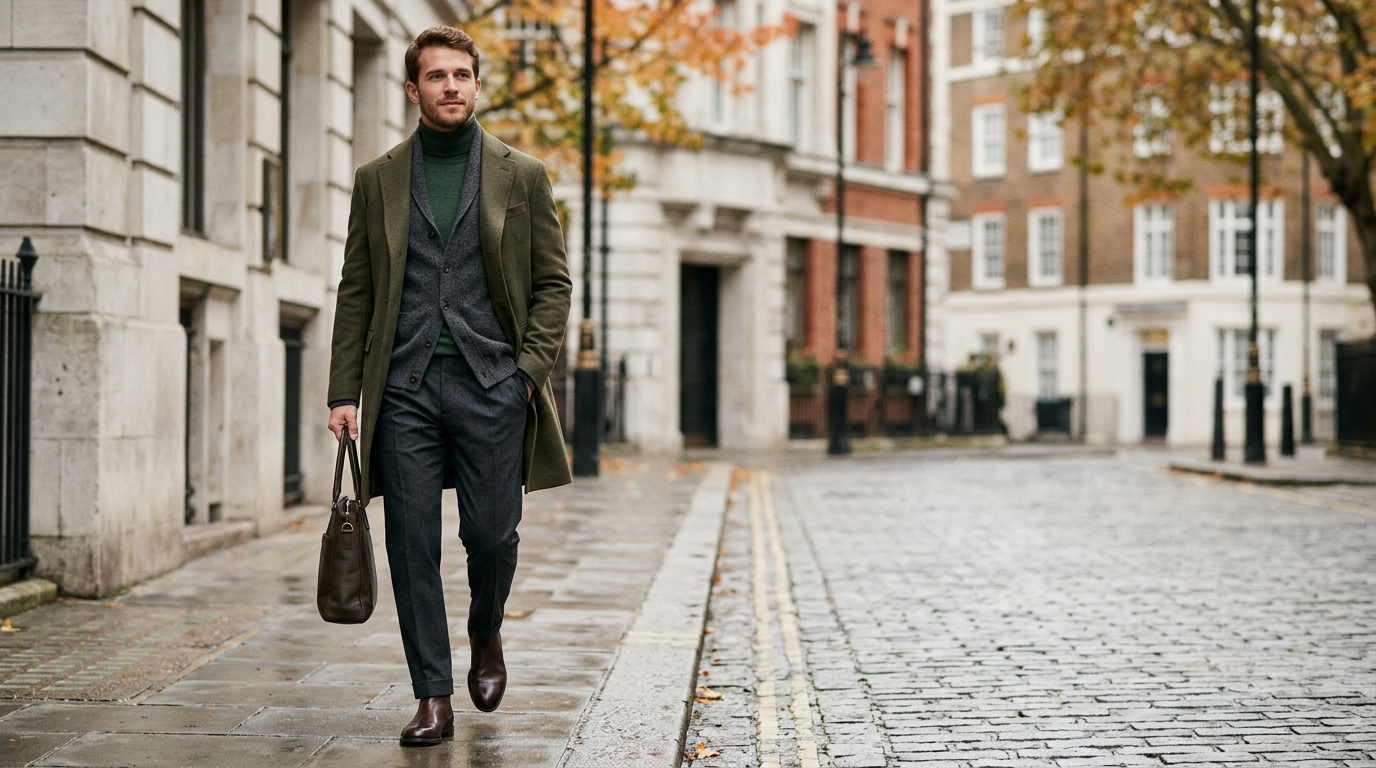
Rollneck knitwear offers an immediate sartorial upgrade, replacing the traditional shirt and tie while retaining sharp formality. A fine-gauge black, chocolate brown, or slate grey rollneck creates a clean vertical line that elongates the torso and frames the jawline. For colder months, a chunkier ribbed turtleneck paired with wide-leg flannel trousers and Goodyear-welted leather boots provides an authoritative, minimalist silhouette suitable for upscale evening dinners and creative boardroom settings.
Cardigans, Knit Polos, and Modern Layering Pieces
Knit polo shirts and button-through cardigans bring tactile texture to smart casual wardrobes. Long-sleeve knitted polos with refined ribbed collars offer mid-century polish when worn untucked over pleated chinos or under unstructured tailoring. Shawl collar cardigans crafted from heavy gauge wool function as structured indoor outerwear, replacing casual zip-ups with refined, architectural warmth that works across casual and formal environments.
Maintenance, Washing, and Long-Term Garment Care
Preserving the structural integrity of natural knits requires deliberate maintenance. Never store fine-gauge or chunky knits on hangers, as gravity distorts shoulder seams and stretches the body over time; always store them folded flat with natural cedar blocks to deter fabric moths. Wash sparingly using cold water and specialized wool shampoo, pressing excess water between dry towels rather than wringing. Use a brass knitwear comb to remove surface pilling without snagging the underlying yarn matrix.