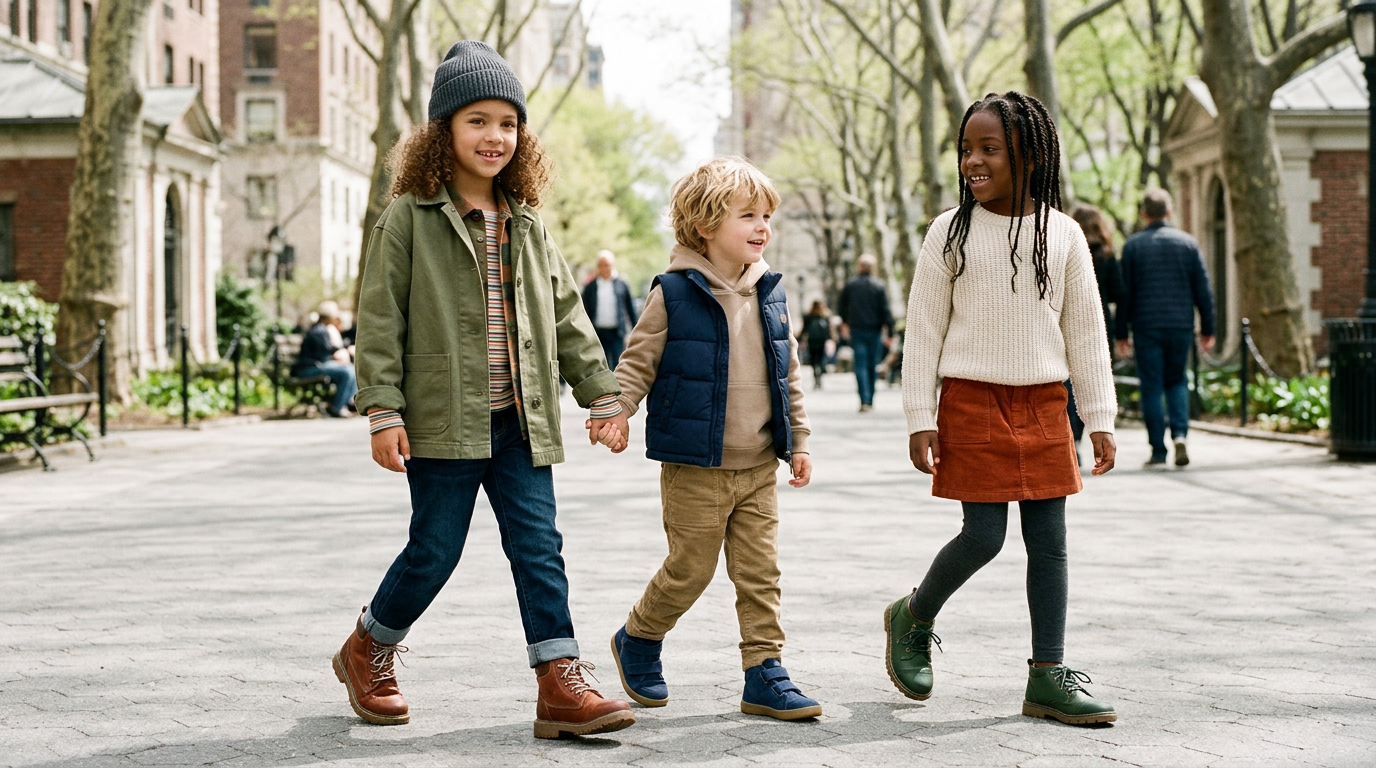
Selecting the right footwear for children requires balancing developmental foot health with everyday playground durability. Young feet grow rapidly and feature pliable cartilage that easily yields to constricting shapes, making proper fit and flexible construction paramount. This guide outlines the technical criteria parents need to evaluate sole architecture, materials, and sizing across every developmental stage.
Anatomy and the Importance of Flexible Soles
Developing feet require footwear that allows natural articulation and muscular development. Rigid, heavy outsoles prevent the foot from bending across the metatarsal joint, which can alter gait mechanics and weaken intrinsic foot muscles. Look for shoes with flexible, low-profile rubber outsoles that bend effortlessly at the ball of the foot while providing sufficient puncture protection against urban surfaces.
A wide, anatomical toe box is equally critical. Children naturally have wider forefeet than adults, with toes that splay during movement to stabilize the body. Footwear with tapered or narrow toe boxes forces the great toe inward, increasing the risk of friction blisters and long-term alignment issues. Prioritize rounded silhouettes with zero-drop or minimal heel elevation.
Accurate Measurement and Growth Allowances
Because children can outgrow footwear in as little as three months, regular foot measurements are essential. Always measure both feet while the child is standing, as weight-bearing causes the foot to lengthen and widen slightly. Schedule fittings in the late afternoon when feet are at their maximum volume due to daily activity.
The ideal growth allowance is approximately 10 to 12 millimeters between the longest toe and the end of the shoe. This space provides adequate room for natural forward slide during walking and running, as well as several months of linear growth. Avoid the temptation to buy shoes two sizes too large, as excess volume causes tripping and foot fatigue.

Selecting Breathable and Resilient Upper Materials
Children sweat at significantly higher rates per square centimeter than adults, making upper breathability a key factor in hygiene and comfort. Full-grain and nubuck leathers remain the gold standard for school shoes and boots, offering natural vapor permeability alongside remarkable abrasion resistance. Vegetable-tanned linings further reduce the risk of allergic contact dermatitis.
For casual and athletic wear, select multi-layered recycled mesh or washed cotton canvas. These textiles promote airflow while remaining machine-washable or easy to spot clean. Avoid non-breathable synthetic PVC uppers, which trap moisture, promote fungal growth, and break down quickly around natural flex points.
Fastening Systems: Balancing Autonomy with Ankle Support
The ideal closure mechanism changes depending on age, dexterity, and activity. Double or triple hook-and-loop straps provide excellent midfoot lockdown and allow toddlers and early primary students to dress independently. Ensure the straps feature reinforced stitching at the return loop to prevent tearing under tension.
Traditional lace-up designs offer the most precise customization for older children with high insteps or narrow heels. For sport activities, consider elastic speed-lacing systems paired with a single top strap, which combine the custom fit of laces with rapid slip-on convenience for busy school mornings.
Maintenance, Shoe Rotation, and Wear Patterns
To maximize longevity and hygiene, establish a two-pair rotation system for daily footwear. Allowing shoes twenty-four hours to thoroughly dry between wears prevents premature breakdown of the internal foam insoles and eliminates lingering odor. Removable insoles should be taken out periodically to air dry and confirm that the footprint has not exceeded the shoe boundaries.
Monitor outsole wear patterns every two months to assess alignment. Uneven erosion on the inside or outside heel edge can signal excessive pronation or sizing issues. Clean leather styles with a damp microfiber cloth and apply a beeswax-based balm monthly to maintain water resistance and suppleness.