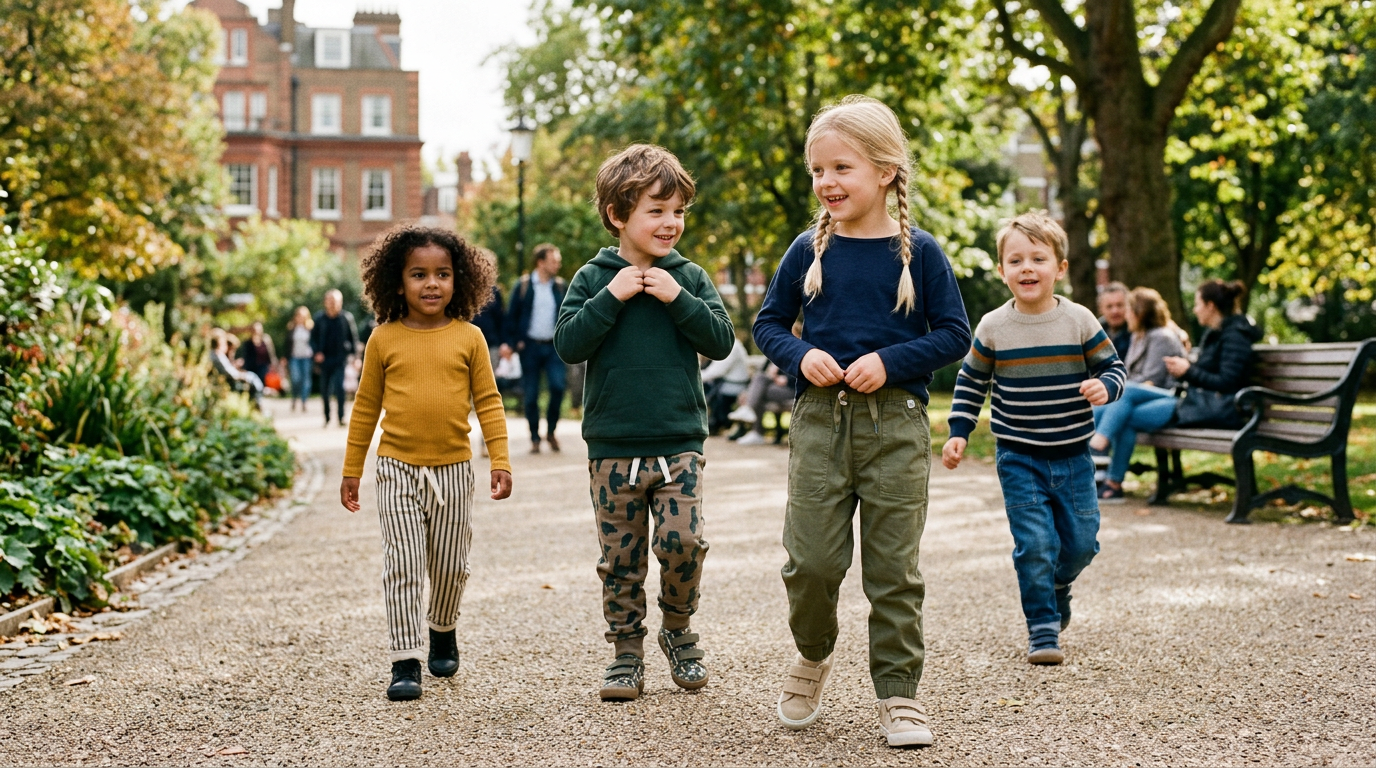
Fostering autonomy in young children begins with the everyday ritual of getting dressed. Selecting clothing engineered specifically for developing motor skills empowers toddlers, reduces morning friction, and builds physical confidence without sacrificing editorial aesthetic.
Prioritize Ergonomic Necklines and Wide Openings
Traditional crew necks with tight ribbing create resistance that frustrates young toddlers attempting to pull shirts over their heads. Look for envelope necklines, boat necks, or henleys constructed with soft, resilient elastane blends. A garment should yield easily under gentle tension and quickly recover its shape without over-stretching after repeated wear.
Raglan sleeves and drop-shoulder silhouettes offer significantly larger armhole openings compared to set-in sleeves. This structural clearance allows children to navigate sleeve tunnels independently, preventing arms from tangling in restrictive shoulder seams during dressing and undressing.
Select Intuitive Waistbands and Seamless Pull-On Bottoms
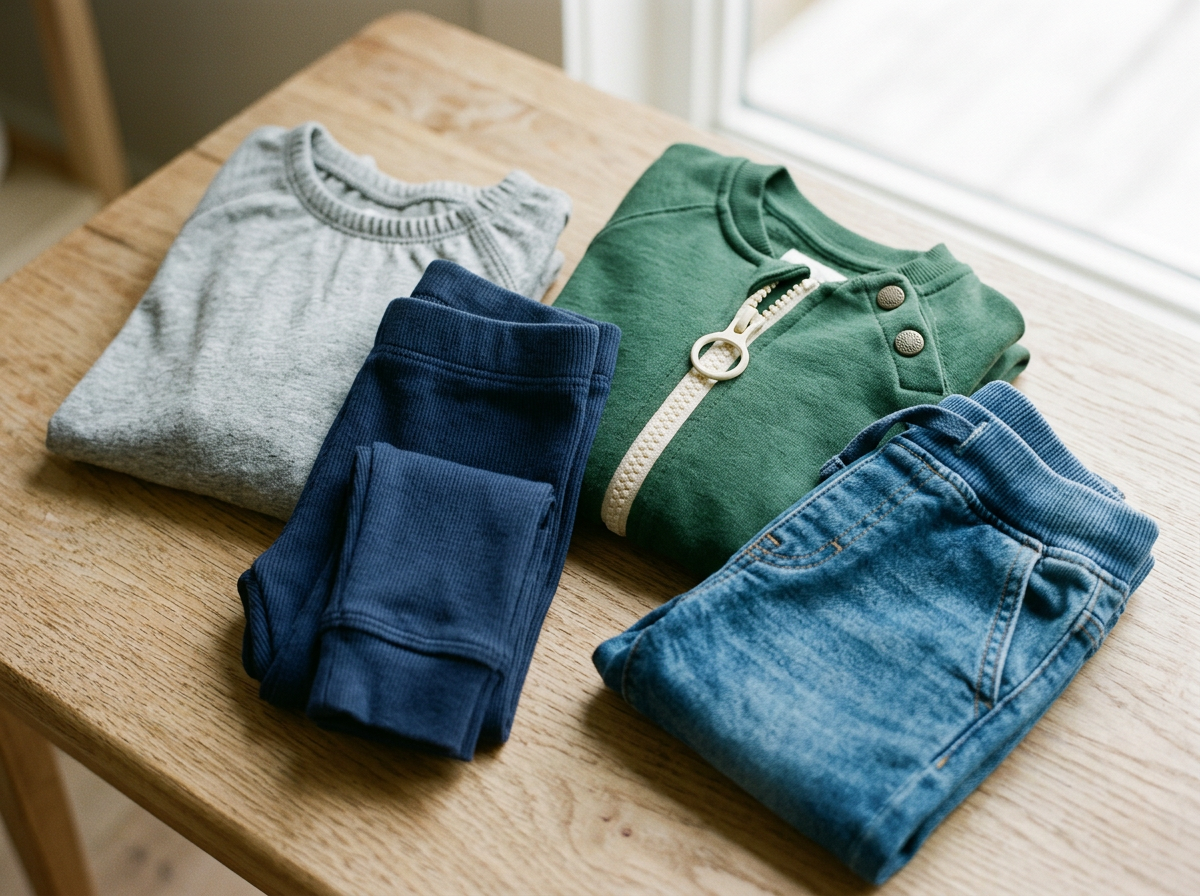
Pants and skirts featuring wide, non-rolling elastic waistbands are essential for early self-dressing. Avoid decorative drawstrings, rigid front flies, and stiff hardware that require complex pincher grips. A 1.5-inch encased knit waistband provides enough structural tension to stay aloft while remaining pliable enough for small hands to pull upward smoothly.
Look for relaxed-taper silhouettes cut from French terry, double-gauze cotton, or stretch twill. These textiles provide the polished drape of tailored trousers while granting the four-way mobility of athletic loungewear, ensuring ease of movement and effortless bathroom independence throughout the day.

Utilize High-Contrast Orientation Cues and Tagless Construction
Determining the front from the back is one of the most common cognitive hurdles for young children. Garments designed with functional front visual cues—such as contrasting kangaroo pockets, asymmetric chest pockets, or centered graphic motifs—allow children to orient pieces correctly before stepping into them.
Opt for pieces with printed interior neck labels rather than stitched woven tags, which often cause sensory irritation and prompt children to reject garments entirely. Contrast interior back-neck binding or colour-blocked rear tabs serve as discreet visual anchors to guide self-guided alignment.
Transition from Complex Buttons to Adaptive Fasteners
When outerwear and layer pieces require closures, select oversized magnetic fasteners, smooth nylon coil zippers with extended ring pulls, or heavy-duty snap buttons. Standard barrel buttons require micro-motor coordination that often causes unnecessary developmental frustration for children under the age of five.
Outerwear featuring two-way zip tracks with colour-matched base docks helps children visually align the insertion pin correctly. Adding a tactile grosgrain ribbon loop to zipper pulls provides extra leverage, allowing small palms to achieve smooth upward zipping independently.
Invest in Low-Maintenance, Shape-Retaining Natural Fabrics
Children learning to dress themselves naturally tug, twist, and pull at hemlines, requiring fabrics with robust dimensional stability. Choose organic medium-weight cotton jersey, ribbed modal blends, and loopback terry cloth between 200 and 260 GSM. These textiles resist seam distortion and withstand frequent washing without pilling.
Wash self-dressing garments inside out in cool water and tumble dry on low to preserve elastic recovery in cuffs and waistbands. Avoiding silicone-heavy fabric softeners ensures fibers retain their natural tensile grip, helping small fingers manipulate seams with greater precision.