
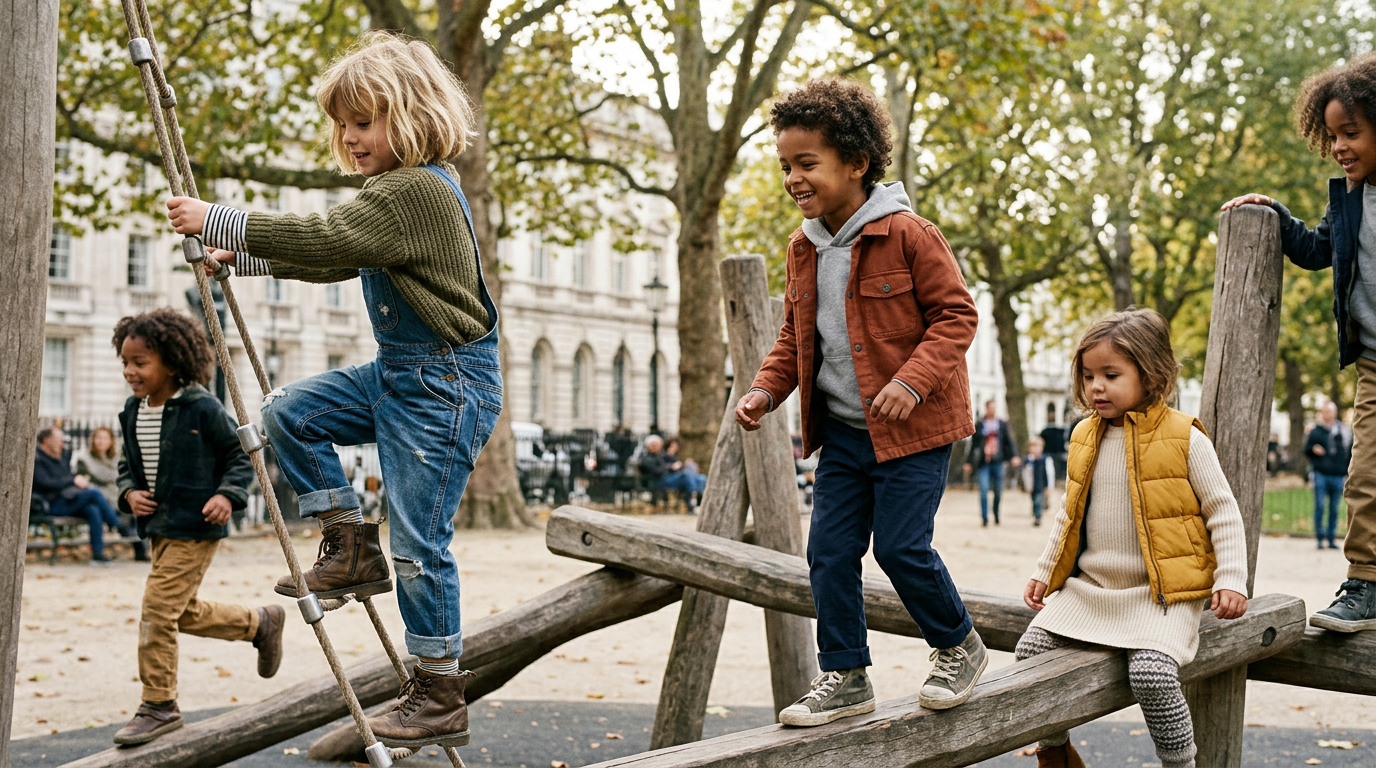
Dressing growing children requires a pragmatic balance between sensory comfort, durable construction, and effortless morning styling. By curating a tight edit of mix-and-match staples crafted from robust natural textiles, parents can eliminate daily decision fatigue while extending garment lifespans across seasons. This editorial guide outlines the foundational pieces, textile standards, and functional tailoring details essential for a high-performing children's wardrobe.
Base Layer Foundations: Organic Cotton and Rib Knits
The cornerstone of any juvenile wardrobe is the everyday base layer. Prioritise certified organic ring-spun cotton and modal blends with a fabric density between 180 and 220 GSM. This weight offers the ideal compromise between breathability and long-term resistance to surface abrasion. Garments tailored with flatlock seams and tagless necklines prevent sensory irritation during extended wear, ensuring total comfort during quiet rest or vigorous activity.
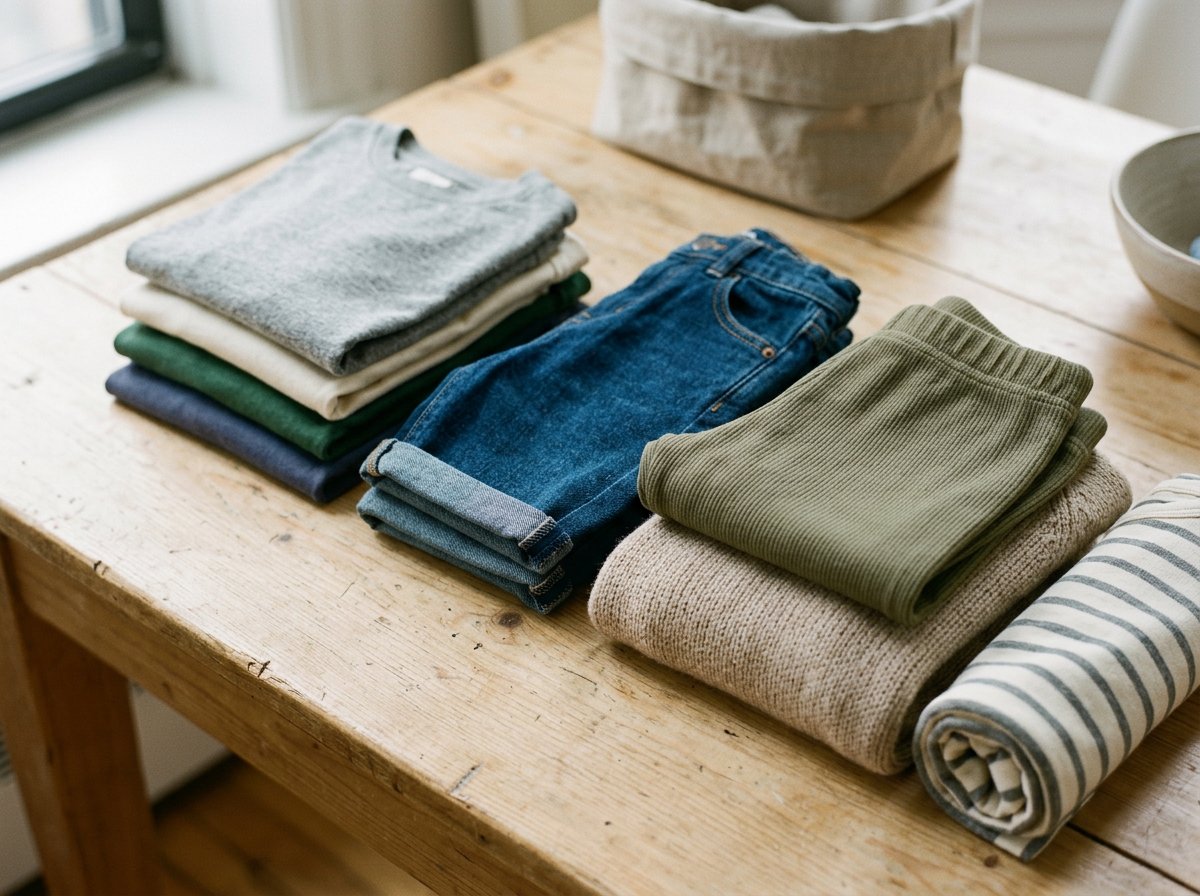
Opt for a cohesive, understated palette of warm oatmeal, slate blue, forest green, and unbleached ecru. Selecting four to six interchangeable crewneck t-shirts and ribbed long-sleeve tops in these tones guarantees that any random top-and-bottom pairing remains visually harmonious, making independent morning dressing effortless for toddlers and young children alike.
Durable Trousers and Bottoms Built for Active Play
Standard denim is frequently too restrictive for active play, while lightweight jersey leggings tear prematurely at the knees. The ideal middle ground lies in heavy-gauge cotton French terry, robust corduroy, and stretch cotton twill with two to three percent elastane. Look specifically for double-layer articulated knees, deep patch pockets, and reinforced bar-tack stitching at high-stress tension points.
Cut is just as critical as fabric composition. Relaxed tapered trousers with elasticated cuffed hems allow full mobility on climbing structures while preventing fabric hems from dragging underneath footwear. Soft elasticated waistbands featuring internal buttonhole elastic allow precise waist adjustments, ensuring bottoms stay secure on narrower frames throughout full-day wear.

Strategic Mid-Layers: Boiled Wool and Heavyweight Fleece
Effective temperature regulation hinges on breathable mid-layers that insulate without creating excessive bulk. Unbrushed organic cotton fleece pullovers and boiled wool cardigans represent the gold standard in childrenswear. Boiled wool naturally repels light moisture and resists wind, while its natural crimp traps ambient body heat efficiently during crisp transitional weather.
When selecting zip jackets and sweatshirts, choose designs with raglan sleeves rather than traditional set-in sleeves. Raglan construction eliminates rigid shoulder seams, providing unrestricted arm mobility and accommodating underlying layers without unneeded tightness across the upper chest and underarms.
Growth-Adaptable Details to Look for on the Rack
Children frequently outgrow the length of a garment long before they outgrow its width. Savvy wardrobe curation targets clever, growth-friendly design signatures that provide multiple seasons of use. Key architectural details include wide fold-over ankle and wrist cuffs, adjustable shoulder straps with multiple button settings, and dropped-shoulder silhouettes that transition gracefully from relaxed to fitted.
Boxy overshirts and chore jackets make superb investment pieces because they function as structured outerwear during early wear and transition cleanly into lightweight indoor mid-layers as the child grows taller. These structural adaptations significantly lower cost-per-wear while instilling a conscious approach to garment longevity.
Footwear Strategy: Ergonomic Flexibility and Weather Resistance
A streamlined footwear edit requires only three foundational pairs: a flexible barefoot-style sneaker, a resilient all-weather boot, and an easy-clean slip-on. Growing feet require wide toe boxes that allow natural metatarsal splay and zero-drop, highly flexible outsoles that promote healthy musculoskeletal development. Avoid heavy, rigid synthetic soles that alter natural gait patterns.
Select vegetable-tanned leather or waxed canvas for transitional footwear, paired with natural rubber soles for optimal traction. Side-zip closures alongside decorative elastic laces give children autonomy in putting on their own shoes while maintaining a snug, supportive fit throughout continuous physical play.
Garment Care and Stain Mitigation for Extended Wear
Preserving a capsule wardrobe requires a measured maintenance routine. Wash natural fibers at 30 degrees Celsius using plant-based enzyme detergents, and reserve high-heat tumble drying exclusively for household linens. Air-drying on flat racks preserves the elastane elasticity in cuffs and waistbands while preventing unexpected vertical shrinkage in cotton goods.
Treat mud, fruit, and grease marks promptly using a mild sodium percarbonate paste or concentrated bile soap before washing. By protecting fiber integrity through gentle laundering, foundational pieces will maintain their color vibrancy, tactile softness, and structural resilience, ready to be handed down cleanly to younger siblings or peers.